Morocco culture and etiquette guide
Moroccan People: A Respectful Guide to Culture, Languages and Etiquette
Moroccans share one nationality and many heritages. Here is what visitors find most useful to understand about identity, language, hospitality and everyday courtesy, written by a local team from Merzouga.
- Official languages
- Arabic and Amazigh (Tamazight)
- Everyday speech
- Darija and Amazigh languages; French widely used
- State religion
- Islam, with free exercise of worship guaranteed
- Golden rule
- Greet first, ask before photos, follow your host
Moroccan people share a single national identity shaped by Amazigh, Arab and Saharan roots, with African, Andalusian, Jewish and Mediterranean influences. Arabic and Amazigh are the official languages, Darija is the everyday language of many households, and customs differ between regions, generations and families. Greet people before anything else, ask before you take a photograph, dress with the setting in mind, and follow your host's lead.
We are a family business from Merzouga, at the edge of the Erg Chebbi dunes, and we have spent more than 15 years helping travellers explore our country. The questions guests ask us most are rarely about routes. They want to know how to say hello, whether to accept a third glass of tea, what to wear in a village, and how to meet people without intruding. This guide answers those questions honestly, without pretending that a whole nation behaves the same way.
Who are the Moroccan people?
Moroccans are citizens of one kingdom whose people descend from Amazigh, Arab, Saharan, Jewish, sub-Saharan African and Andalusian communities, very often in combination, after many centuries of marriage, trade and migration.
Morocco describes this mix in its own founding text. The preamble to the 2011 Constitution presents national unity as the meeting of Arab-Islamic, Amazigh and Saharan-Hassani components, enriched by African, Andalusian, Hebraic and Mediterranean influences. It is a useful starting point for visitors, because it shows that diversity is part of how the country understands itself rather than a footnote.
Nationality, ancestry, language and identity are different things
A woman in Casablanca might have Amazigh grandparents from the Souss, speak Darija at home and French at work, and describe herself simply as Moroccan. A man from the Rif might speak Tarifit first and Arabic second. Neither is "more" or "less" Moroccan. Avoid asking people to choose between Arab and Amazigh, or assuming one from appearance or a surname; if identity comes up, let people describe themselves.
Amazigh or Berber?
Amazigh (plural Imazighen) is the name many people use for themselves and for their languages and culture. "Berber" is the older term most English-speaking readers know, and some Moroccans still use it, but others find it outdated. On this site we mostly use Amazigh, with Berber in brackets where it helps.
A long Jewish heritage
Jewish communities have been part of Moroccan life for many centuries, in cities such as Fes, Marrakech, Essaouira and Casablanca and in towns across the south. Historic Jewish quarters, known as mellahs, survive in several medinas, and Casablanca has a museum dedicated to Moroccan Judaism. If this history interests you, our private Jewish heritage journeys are planned around it.
What languages are spoken in Morocco?
Arabic and Amazigh (Tamazight) are Morocco's two official languages. Day to day, most conversation happens in Darija, the Moroccan form of Arabic, or in one of the Amazigh languages, while French remains common in business, higher education and many services.
The Constitution names Arabic as the official language of the state and adds Tamazight as an official language too, describing it as
"common patrimony of all Moroccans without exception."
Morocco's Constitution of 2011, Article 5 (English translation, Constitute Project)
Arabic and Darija
Modern Standard Arabic is used in formal writing, news, education and religious life. Darija, spoken at home, in markets and in taxis, sounds quite different: it has its own grammar and vocabulary and borrows words from Amazigh, French and Spanish. A visitor who has studied Standard Arabic will be understood, but may find Darija hard to follow at first.
Amazigh languages and Tifinagh
Amazigh is not a single dialect. The main varieties are usually described as Tarifit in the Rif, Central Atlas Tamazight in the Middle Atlas, and Tachelhit in the Souss and much of the High and Anti-Atlas. You will see the Tifinagh alphabet on public buildings and road signs alongside Arabic. In the far south, Hassaniya, a form of Arabic, is spoken, and the Constitution commits the state to preserving it.
French, Spanish and English
French is widely understood in cities and in administration. Spanish is heard in parts of the north. English is increasingly common among younger people and in tourism, but it is not universal, especially in rural areas, so do not expect everyone you meet to speak it. A few words of greeting go a long way:
- As-salamu alaykumPeace be upon you (hello)
- Labas?All well? (Darija)
- ShukranThank you (Darija)
- TanmirtThank you (in many Amazigh areas)
- La, shukranNo, thank you
- BslamaGoodbye
What does Moroccan hospitality look like?
Hospitality is a widely shared value in Morocco, usually shown through tea, food and making guests comfortable. It is part of personal relationships, though, not a service visitors are owed, and it looks different from one family to the next.
Mint tea
Green tea brewed with fresh mint, and often a good deal of sugar, is the classic welcome. It is poured from a height to give the glass a light foam. Accepting a glass is a friendly gesture; you are not obliged to finish a second or third, and it is fine to ask for less sugar.
Invitations
Real invitations happen, most often once you have spent time with someone, through a guide, a guesthouse owner or a driver you have come to know. Be more cautious with invitations from strangers in busy medinas that lead towards a shop or a paid service. Declining politely, with a smile and "la, shukran", is never rude.
Everyday courtesy
Courtesy here is often a matter of time. People greet each other before discussing business, ask after family, and expect a little conversation. In the souks, bargaining is normal where prices are not marked; treat it as a friendly exchange, and only start if you intend to buy at a fair price.
How should visitors greet people?
Always greet before asking a question. "As-salamu alaykum" works almost everywhere, and the reply is "wa alaykum as-salam"; a simple "salam" is fine in casual settings.
Handshakes and personal boundaries
Handshakes are common and usually gentle, sometimes followed by touching the right hand to the heart. Some people, for religious or personal reasons, prefer not to shake hands with someone of the opposite sex. Let the other person offer a hand first; if they place a hand on their heart instead, do the same. Friends of the same gender may kiss on the cheeks, but nobody expects that from a visitor.
Small talk
Asking "labas?" and enquiring after someone's health or family is part of a normal greeting. Responding warmly before getting to your question, whether you are asking directions or checking into a riad, makes every exchange easier.
What should you know before visiting a Moroccan home?
Follow your host's lead: take your shoes off if others have, bring a small gift, sit where you are shown, and ask before taking any photographs. Customs vary between households, so watching and asking are always acceptable.
Shoes
Many families remove shoes at the door or before stepping onto carpets in the salon. If you see a row of shoes by the entrance, add yours.
Gifts
Pastries, fruit, sweets, or tea and sugar are welcome gifts. Avoid bringing alcohol unless you know your host drinks.
Seating
Guests are often seated on the long cushioned banquettes of the salon, sometimes in the most comfortable spot. Wait to be shown where to sit, and stand when an older person enters if those around you do.
Photographs and privacy
A home is private space. Ask before photographing rooms, food or family members, and do not post images of people online without their agreement.
What are common Moroccan dining customs?
Many family meals are shared from one central dish, with bread used to scoop food and the right hand used for eating. Hands are washed before the meal. Cutlery is common too, in restaurants and in many homes, so use whichever your host offers.
Shared dishes and bread
When a tagine arrives in the middle of the table, each person eats from the section in front of them. Hosts often move the best pieces of meat towards guests; it is a kindness, and you can thank them and eat at your own pace. Round loaves of bread, khobz, act as a spoon for sauces and vegetables.
The right hand and handwashing
Traditionally the right hand is used for eating and for passing food. Before the meal, someone may bring a basin and kettle so guests can rinse their hands at the table. If you are left-handed, nobody expects perfection; a little care is enough.
Couscous and shared meals
Many families serve couscous on Fridays and at celebrations. In 2020 UNESCO inscribed the knowledge and practices around couscous, nominated jointly by Algeria, Mauritania, Morocco and Tunisia, noting that the dish carries meanings linked to "solidarity, conviviality, sharing meals and togetherness." Saying "bssaha" (to your health) to the cook is a nice way to end.
How do religion and Ramadan affect a visit?
Islam is Morocco's state religion, and the Constitution guarantees everyone the free exercise of worship. Most Moroccans are Muslim, but personal observance varies widely, so it is best not to make assumptions about anyone's beliefs.
Mosques and religious sites
Most active mosques in Morocco are open only to Muslims. The Hassan II Mosque in Casablanca is a notable exception, with guided visits for non-Muslims, and historic Qur'anic schools such as the medersas of Fes and Marrakech can be visited as monuments. The call to prayer sounds five times a day; there is nothing you need to do except lower your voice if you are close to a mosque.
Travelling during Ramadan
Ramadan follows the lunar calendar, so it begins roughly eleven days earlier each year. Many people fast from dawn to sunset, opening hours change, and streets go quiet at sunset as families break the fast, then come alive in the evening. Travelling during Ramadan works well: hotels, riads and desert camps continue to serve guests, and many restaurants in cities remain open. Be discreet about eating, drinking or smoking in public during the day, especially in smaller towns, and allow extra flexibility in your schedule.
Other faiths
Morocco also has a Jewish community with synagogues still in use, and churches serving Christian residents and visitors. You are welcome to practise your own faith privately while you travel.
What should travellers wear?
There is no dress code for visitors, but clothing that covers shoulders and knees is comfortable and respectful in medinas, villages and religious sites. Modern city districts and beach resorts are more relaxed.
Cities
In new-town districts of Casablanca, Rabat or Marrakech you will see every style of clothing. In the old medinas, loose trousers or skirts and tops with sleeves will help you blend in and keep you cool.
Mountain and rural villages
Rural communities tend to dress more conservatively. Long, light layers are practical for walking anyway, and a light scarf is useful for sun, dust and visits.
The Sahara
Choose loose, breathable clothing for the day and bring a warm layer: desert nights can be cold, especially in winter. Closed shoes or sandals with a strap are easier than flip-flops in sand.
Religious sites
Where visitors are allowed in, cover shoulders and knees; women may want a scarf to hand.
Should you ask permission before taking photographs?
Yes. Ask before photographing any person, accept "no" gracefully, and do not photograph children without their parents' clear agreement.
Many Moroccans are happy to be photographed once asked; others prefer not to be, for religious, personal or privacy reasons. Street performers and people posing in costume in tourist squares usually expect a small payment, so agree before you raise the camera. Avoid photographing people praying, the inside of homes without permission, and police or military sites. Drones are tightly restricted in Morocco and generally need prior authorisation, so leave yours at home unless permission has been confirmed. Landscapes, architecture and markets offer plenty, and a photograph taken after a conversation is usually the better picture.
Moroccan etiquette at a glance
The table sums up the habits that matter most; treat it as a guide, since practice varies by family, region and generation.
| Situation | Usually appreciated | Best avoided |
|---|---|---|
| Greetings | A greeting before any question; letting others offer a hand first | Launching straight into requests |
| Home visits | Shoes off if others have; a small gift of pastries or fruit | Bringing alcohol unasked; wandering into private rooms |
| Meals | Eating from your side of the dish; right hand or cutlery offered | Reaching across the dish |
| Photography | Asking first; agreeing any payment beforehand | Photographing children or people praying |
| Clothing | Shoulders and knees covered in medinas and villages | Beachwear away from the beach |
| Ramadan | Patience with changed hours | Eating or smoking openly in the street by day |
| Souks | Friendly bargaining where prices are not marked | Bargaining with no intention of buying |
How does culture vary between cities, mountains and the Sahara?
Daily life changes noticeably with landscape: crafts and dense medinas in the imperial cities, Amazigh farming villages in the Atlas, and communities of the oases and dunes in the south-east, each with its own rhythm.
Imperial cities
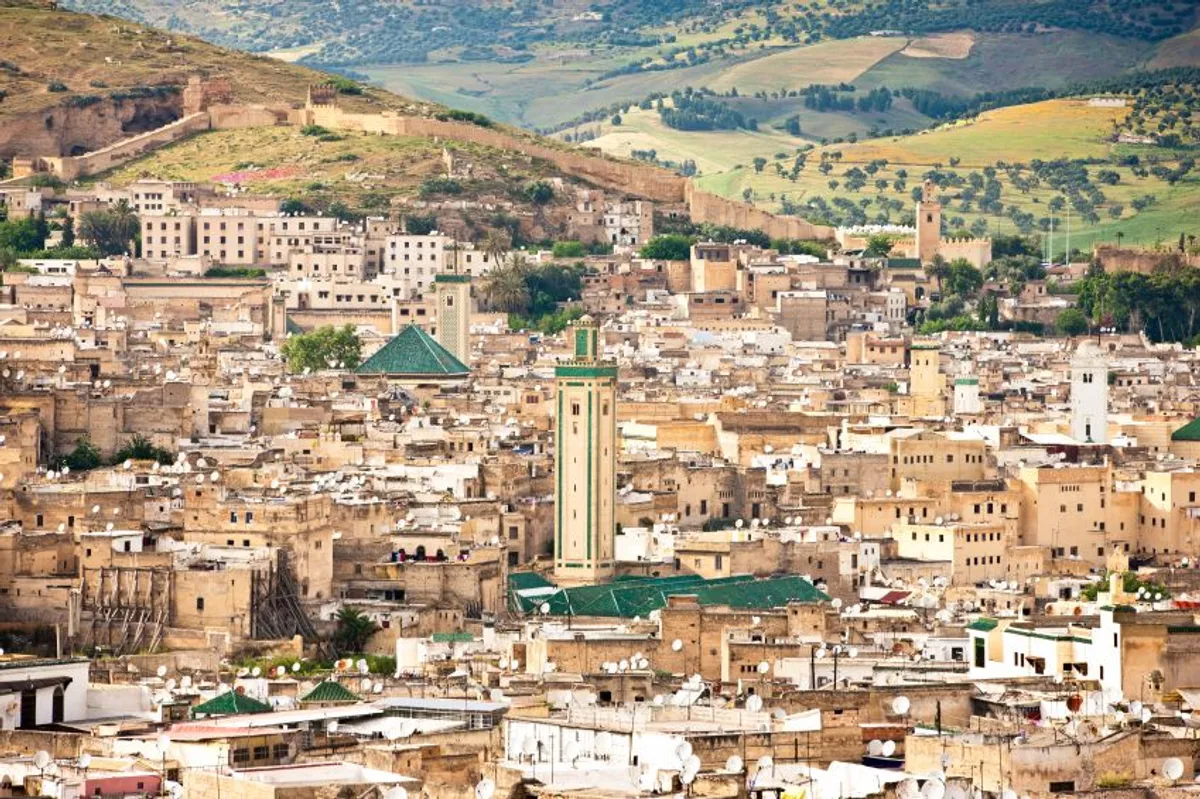
The medina of Fes is still a working city of tanners, weavers, metalworkers and students. Marrakech's main square, Jemaa el-Fna, gathers storytellers, musicians and food stalls every evening. A guided day with a licensed city guide helps you read what you see. Many of our Fes desert tours and Sahara trips from Marrakech combine city time with the south.
The Atlas Mountains
In the High and Middle Atlas, Amazigh villages cling to the slopes above terraced fields and walnut groves. Life follows the seasons, and guesthouses run by mountain families offer simple rooms and home cooking. Our guided Atlas walking holidays are built around this world.
The Sahara and the south-east
This is our home. Around Merzouga and the Erg Chebbi dunes live Amazigh and Arabic-speaking families, people with nomadic roots, and Gnawa musicians whose tradition UNESCO describes as
"part of Morocco's multifaceted culture and identity."
UNESCO Intangible Cultural Heritage, Gnawa (inscribed 2019)
Life here revolves around oases, palm groves and, increasingly, tourism. Our Merzouga desert page explains the camps and experiences available.
The north and the Atlantic coast
Tangier, Tetouan and Chefchaouen carry strong Andalusian and Mediterranean influences, while Essaouira's history mixes Amazigh, Arab, Jewish and European trading communities. Our private tours from Tangier link the north with Fes and the dunes.
How can travellers meet local people respectfully?
The most rewarding encounters usually come through licensed guides, family-run guesthouses, cooperatives, workshops and visits organised in advance, where consent and fair payment are part of the arrangement.
Official city guides are licensed and carry identification; be wary of unsolicited offers to "show you the way". Women's cooperatives, for example for argan oil or weaving, let you buy directly from the people who make the product. Cooking classes and craft workshops give a natural reason to spend time together.
Some of our itineraries include agreed visits to nomad families or a Gnawa village near Merzouga; most do not, and every tour page lists what is included. These visits are arranged with the families concerned, not unannounced drop-ins. Please don't hand money or sweets to children, ask before entering any home or tent, and pay for any service at the price agreed.
Why explore Morocco on a private cultural tour?
A private tour lets you set the pace, shape the route around your interests, and travel with a driver-guide who can help with language and logistics, while a local team coordinates everything behind the scenes.
Your pace
Linger in a medina, add a rest day, or break a long drive with an extra night.
Your route
Start and finish where your flights do, and add the places that matter to you.
Help with communication
Our team speaks English, French and Spanish; guide language is confirmed with your quote.
Local coordination
Hakim and Aziz plan each trip from Merzouga, with clear inclusions and exclusions in writing.
Explore Morocco's Culture on a Private Tour
These 22 private journeys, grouped by starting city, are the itineraries on our site that connect best with the culture in this guide. Every one is for your group only, prices are quoted individually, and inclusions differ, so check each tour page.
Looking for Morocco tour packages that combine heritage and the Sahara? Use the starting city that matches your flights, then ask us to adjust length, pace or accommodation. Village visits, family meals and workshops are only included where a card says so.
Private tours from Marrakech
Compare all Marrakech desert tours-
2-Day Marrakech to Zagora Desert Tour
The shortest desert trip from Marrakech, over the High Atlas and down to Zagora's rocky desert.
- High Atlas crossing
- Drâa Valley palm groves
- Overnight in the Zagora area
Best for: travellers with only two days.
See the 2-day Zagora itinerary -
3-Day Marrakech to Merzouga Desert Round Trip
The fastest way to sleep among the Erg Chebbi dunes and return to Marrakech.
- Aït Ben Haddou
- Dadès and Todra gorges
- Sunset camel ride and one camp night
Best for: big dunes on limited time.
View the 3-day Merzouga round trip -
3-Day Marrakech to Fes via Merzouga
A one-way crossing that turns the Marrakech to Fes transfer into a desert journey.
- Night in the Dadès Valley
- Camp night in the Erg Chebbi dunes
- Ends in Fes, ready for the medina
Best for: continuing your trip in Fes.
Explore the Marrakech to Fes crossing -
5-Day Marrakech to Erg Chebbi with a Desert Day
Two nights around Merzouga, with a full day to explore the desert and its communities.
- Gnawa village and nomad families
- One camp night and one desert hotel night
- Return broken by a night in Ouarzazate
Best for: travellers who want time with desert life.
Read the 5-day desert itinerary -
8-Day Marrakech to the Sahara via Merzouga and Zagora
The most complete southern loop from Marrakech, visiting both desert regions.
- Nights in Ouarzazate, Tinghir, Erg Chebbi and Zagora
- One camp night in the dunes
- Spanish-speaking guide listed
Best for: a full southern Morocco circuit.
See the 8-day southern circuit
Private tours from Fes
Compare all Fes desert tours-
3-Day Fes Desert Round Trip
A full day around Merzouga before a night in the dunes, then back to Fes.
- Khamlia village
- Mifis mines and an oasis
- Merzouga hotel night plus one camp night
Best for: returning to Fes with real desert time.
View the 3-day Fes round trip -
4-Day Fes to Marrakech via the Sahara
A desert crossing with a full day around Merzouga and a second night at camp.
- Gnawa village and nomad families
- Two camp nights in Erg Chebbi
- Todra and Dadès gorges
Best for: two desert nights, ending in Marrakech.
Explore the 4-day Fes to Marrakech tour -
6-Day Culture and Desert Tour from Fes
A slower crossing that balances desert days with heritage sites and city time.
- Full desert day around Merzouga
- Aït Ben Haddou and a night in Ouarzazate
- Guided day in Marrakech
Best for: a gentler pace to Marrakech.
Read the 6-day culture and desert tour -
7-Day Morocco Tour from Fes
A full loop: desert, gorges and kasbahs, Marrakech, then three historic cities on the way home.
- One camp night in the dunes
- A night in Marrakech
- Rabat, Volubilis and Meknes
Best for: returning to Fes after seeing Marrakech.
See the 7-day loop from Fes
Private tours from Casablanca
Compare all Casablanca tours-
6-Day Casablanca to Marrakech Desert Tour
The shortest Sahara journey from Casablanca, through Rabat and Fes to the dunes.
- Guided day in Fes
- Two camp nights in Erg Chebbi
- Finish in Marrakech
Best for: travellers with about a week.
View the 6-day Casablanca tour -
8-Day Casablanca to Fes, Desert and Marrakech
The 6-day route plus two day trips from Marrakech, inland and to the Atlantic.
- Two desert camp nights
- Ouzoud waterfalls
- Essaouira on the coast
Best for: desert, cities and coast in one trip.
Explore the 8-day Casablanca itinerary -
10-Day Casablanca Round Trip via Merzouga
A complete loop back to Casablanca, with time in both great medinas.
- Guided days in Marrakech and Fes
- Full day around Merzouga and a camp night
- Volubilis on the way back
Best for: flying in and out of Casablanca.
Read the 10-day round trip -
15-Day Morocco Desert Tour from Casablanca
The longest route: imperial cities, the Sahara and the Atlantic coast at an unhurried pace.
- Two-night stays in Fes, Agadir, Essaouira and Marrakech
- One camp night in the dunes
Best for: seeing cities, desert and coast without rushing.
See the 15-day journey
Private tours from Tangier
Compare all Tangier tours-
8-Day Tangier Desert Tour across Fes
A balanced first visit from the north, with time in the blue town and two great medinas.
- A night in Chefchaouen
- Volubilis, Meknes and a guided Fes day
- Two desert nights, guided Marrakech tour
Best for: arriving in the north.
View the 8-day Tangier tour -
12-Day Tangier Round Trip with Merzouga and the Coast
A full loop back to Tangier through the north, the desert and the Atlantic towns.
- Fes and one night in the dunes
- Two nights in Marrakech
- Casablanca, Rabat and a free day in Asilah
Best for: arriving and leaving through Tangier.
Explore the 12-day round trip -
15-Day Morocco Tour from Tangier
The coast first, then Marrakech, the Sahara and the north on the way back.
- Ourika Valley day trip from Marrakech
- Two nights in the dunes
- Free day in Fes, then Chefchaouen
Best for: seeing the whole country.
Read the 15-day Tangier itinerary
Private tours from Ouarzazate
Compare all Ouarzazate tours-
2-Day Ouarzazate to Zagora and Erg Chegaga
A remote desert camp reached through the Drâa Valley's palm groves.
- Lunch stop in Zagora
- 4×4 track beyond M'Hamid to an Erg Chegaga camp
- Off-road return via Lake Iriqui
Best for: a quieter, more remote desert.
View the Erg Chegaga itinerary -
3-Day Merzouga Desert Tour from Ouarzazate
The Merzouga loop at an easier pace, with a night by the gorges on the way.
- Valley of Roses
- Night at the Todra Gorge
- Nomad visit and a camp night
Best for: Merzouga without rushing.
Explore the 3-day Merzouga loop -
5-Day Ouarzazate to Fes via Merzouga
A one-way journey north, from the kasbah country through the dunes to Fes.
- Arrival night in Ouarzazate
- Camp night in Erg Chebbi
- Middle Atlas crossing and a guided day in Fes
Best for: travelling on to Fes.
Read the Ouarzazate to Fes tour
Walking journeys and heritage tours
See our longer grand tours-
Proposed itinerary
Imlil Valleys Walking Escape
Gentle village-to-village walking in the Toubkal area, confirmed locally for your dates.
- Aït Mizane Valley walk
- Tea with a host family in a mountain village
- A quiet night in Ouirgane
Best for: first-time hikers and couples.
View the Imlil walking proposal -
Proposed itinerary
Aït Bouguemez Valley and Village Stays
Four nights in a high, green valley of the central High Atlas, walking between earth-built villages.
- Simple guesthouses with home-cooked meals
- Ouzoud waterfalls
- A lakeside night on the way back
Best for: walkers who want village life.
See the Aït Bouguemez proposal -
Collection
Private Morocco Jewish Heritage Tours
Tailor-made journeys exploring mellahs, museums and memory sites, at your pace.
- Site access confirmed before booking
- Can be combined with the Sahara
- Dietary and Shabbat requests discussed in advance
Best for: families exploring their heritage.
Browse the Jewish heritage collection
Sources and further reading
Facts about language, religion and heritage in this guide come from the sources below. None of these organisations endorses any tour operator.
- Morocco's Constitution of 2011, English translation, Constitute Project
- Knowledge, know-how and practices pertaining to couscous, UNESCO Intangible Cultural Heritage
- Gnawa, UNESCO Intangible Cultural Heritage
- Medina of Fez, UNESCO World Heritage Centre
Moroccan People and Culture: FAQs
Short answers to the questions travellers ask us most about Moroccan customs and cultural travel.
Do most Moroccans speak English?
Some do, but not everyone. English is growing among younger people and in tourism, French is more widely understood in cities, and in rural areas Darija or an Amazigh language may be the only shared language. A few greetings help everywhere.
Is it rude to refuse mint tea?
No. A smile and "la, shukran" is perfectly polite. Accepting one glass is a warm gesture if you would like to, and you can always ask for less sugar.
Can I eat with a fork in Morocco?
Yes. Restaurants and many homes provide cutlery. If you eat by hand from a shared dish, use your right hand and a piece of bread, and eat from the section in front of you.
Do women travellers need to cover their hair?
No, it is not required for visitors. Carrying a light scarf is still useful for sun, dust and any religious site where covering is expected.
Is it a good idea to travel during Ramadan?
Yes, with a little flexibility. Hotels, riads and camps continue to serve guests, but opening hours change and some cafés close by day in smaller towns. Avoid eating or smoking openly in the street during daylight.
Can non-Muslims visit mosques?
Most active mosques are open only to Muslims. The Hassan II Mosque in Casablanca offers guided visits, and historic medersas in Fes and Marrakech can be visited as monuments.
Can we meet nomad families or visit a village on our tour?
Some itineraries include it; most do not. The 5-day Marrakech tour, the 4-day Fes to Marrakech tour and the 3-day Merzouga tour from Ouarzazate list visits with nomad families or a Gnawa village. On other routes, ask us and we will tell you honestly what can be arranged with the families concerned.
Do I need a guide in the medinas?
No, but a licensed guide adds a great deal. Several of our tours include guided days in Fes or Marrakech, and we can add one to any private itinerary on request.
Are your tours private, and do they include flights?
Every tour is private, and international flights are not included. Whether you are travelling from the UK, the USA, Canada, Australia, Malaysia or Singapore, we plan your arrangements within Morocco around the cities you fly into and out of.
Request a Personalised Morocco Itinerary
Send us a few details and we will reply with a private day-by-day itinerary and quotation. Nothing is booked until you approve it.
To help us plan, please include:
- Your travel dates, or the month you have in mind
- Number of travellers, and children's ages
- Preferred length of trip
- Arrival and departure cities
- The style of accommodation you prefer
- The cultural interests you would like to explore
Prefer to write directly? Email culture.moroccotours@gmail.com or call +212 662 178 227.
Send your trip details
By sending the form you agree to our privacy policy and terms and conditions.
Book a Private Morocco Tour with a Local Team
Choose a tour above or describe the trip you have in mind, and we will design a private journey around your interests, pace and dates.
Read our privacy policy and terms and conditions.